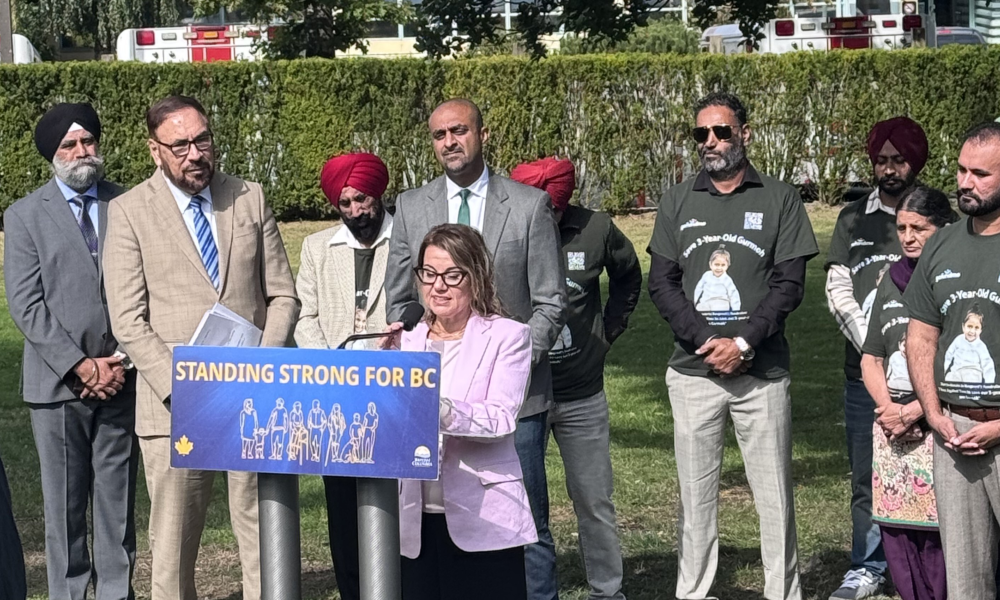
People living with rare genetic diseases, including children, will have improved access to emerging treatment opportunities as the Province partners with two of Canada’s leading research institutions to create a new pathway that helps patients and their families move from diagnosis to potential therapy sooner.
“Learning that your child has a rare genetic disease is stressful enough, so navigating what comes next should be as simple as possible,” said Ravi Kahlon, Minister of Health. “Every diagnosis should be an opportunity, not an end point. By investing in cutting-edge gene-editing research and creating a first-of-its-kind diagnosis-to-therapy pathway in British Columbia, we’re helping families access potential treatment opportunities sooner while building a system that can benefit children, as well as adults, with rare genetic diseases long into the future.”
The Provincial Health Services Authority (PHSA) and BC Children’s Hospital are partnering with the University of British Columbia and McGill University’s Montreal Neurological Institute-Hospital (The Neuro) to establish a pathway from diagnosis to potential therapy for people with rare genetic diseases.
The partnership is motivated by the experience of Gurmoh Gill, a B.C. child living with hereditary spastic paraplegia type 4 (SPG4), a rare neurodegenerative disease. His experience highlighted a challenge faced by many families affected by rare diseases: not knowing where to turn when a diagnosis is made but no established treatment exists.
While advances in genomic medicine mean more children are receiving diagnoses for rare genetic diseases, families are often left wondering what comes next. In many cases, there is no co-ordinated process to determine whether treatment opportunities exist, how they should be evaluated or where they can be accessed. Gurmoh’s case will help set the foundation for the pathway so children with rare diseases and their families don’t have to start from scratch.
“When we first received Gurmoh’s diagnosis, we didn’t know if there was any hope,” said Stalin and Navpreet Gill, parents of Gurmoh Gill. “Today, we are deeply grateful to the provincial government, clinicians, researchers and everyone who have come together to support Gurmoh and explore a potential treatment. This work gives our family hope for the future, and we are especially thankful that Gurmoh’s journey could give hope for other children and families facing rare diseases.”
Researchers at The Neuro will work with partners in British Columbia to develop personalized gene-editing therapy for Gurmoh. The work includes therapeutic design, laboratory testing, safety and efficacy studies, regulatory review and preparation for clinical trials.
Investing in advancing gene editing
British Columbia already has strong capacity in genomic medicine, including advanced sequencing, diagnostic and data-analysis infrastructure at PHSA with Canada’s Michael Smith Genome Sciences Centre and specialized clinical expertise at B.C. Children’s Hospital. However, there is no clear way for families to go from diagnosis to treatment, which can make it difficult for them to determine whether treatment is possible, navigate research and regulatory processes, and access treatment.
Gene editing is one of the fastest-moving health-research areas, and new discoveries are emerging around the world. B.C. needs the expertise and processes to identify promising opportunities and determine how they could be translated into therapies for patients in B.C.
That is why BC Children’s Hospital, as part of PHSA, is working with the University of British Columbia to establish a co-ordinated approach for evaluating and advancing potential therapies for rare genetic diseases. The work will build on B.C.’s existing strengths in genomics, clinical care and research while connecting patients to expertise beyond the province when needed.
“Genomic diagnosis is increasingly giving us answers for children with rare diseases,” said Dr. Federica Di Palma, chief health genomic officer, PHSA. “The next challenge is turning those answers into opportunities for treatment. By combining British Columbia’s genomic and clinical capabilities with specialized therapy-development expertise, we can create a pathway that begins with one child but is designed to help many more families in the future.”
The work will apply to patients across a broad range of rare genetic conditions, including neurological, immunological, metabolic, hematological, cardiac, pulmonary and gastrointestinal disorders.
The project will create a system that helps evaluate whether therapies may be possible for newly diagnosed patients, supports the research needed to understand how rare diseases work, improves readiness for clinical trials and helps connect families with treatment opportunities in British Columbia, throughout Canada and around the world.
Supporting life sciences through Look West
The work also supports the Province’s Look West strategy by strengthening British Columbia’s position as a leader in life sciences, precision medicine and advanced genetic therapies.
“British Columbia has the expertise, talent and research capacity to help lead the future of precision medicine and rare-disease treatment,” said Adrian Dix, acting Minister of Jobs and Economic Growth. “Through the Look West strategy, we’re supporting made-in-B.C. innovation that helps turn scientific discoveries into real treatment opportunities for patients and families while strengthening our life-sciences sector.”
The Look West strategy identifies life sciences as one of B.C.’s fastest-growing strategic sectors, with more than 2,000 companies, almost 27,000 jobs and strong investment opportunities. The strategy aims to increase employment in the sector to 40,000 jobs and grow its economic impact by 75% over the next decade.
Quote:
Dr. Ziv Gan-Or, director of clinical and translational research,The Neuro –
“Thanks to PHSA and BC Children’s Hospital, we will be able to move forward with this project, which has the potential to change the lives of thousands of people living with rare diseases. It is very inspiring to see the work and dedication of the Gill family are having a real impact in the quest for better neurological-disease treatments.”
Quick Facts:
- Only a small number of gene-editing therapies have been developed and tested globally, and none have been developed specifically for SPG4.
- PHSA will lead the work as part of the National Strategy for Drugs for Rare Diseases.
- British Columbia was the first province to sign an agreement with the federal government under the strategy in 2024.
Learn More:
- To learn more about Look West: Jobs and Prosperity for BC and Canada, visit: https://gov.bc.ca/LookWest
- To learn more about the National Strategy for Drugs for Rare Diseases, visit: https://www.canada.ca/en/health-canada/services/health-services-benefits/strategy-drugs-rare-diseases.html
This article has been adapted from its original version. Read the BC Gov News story here.


